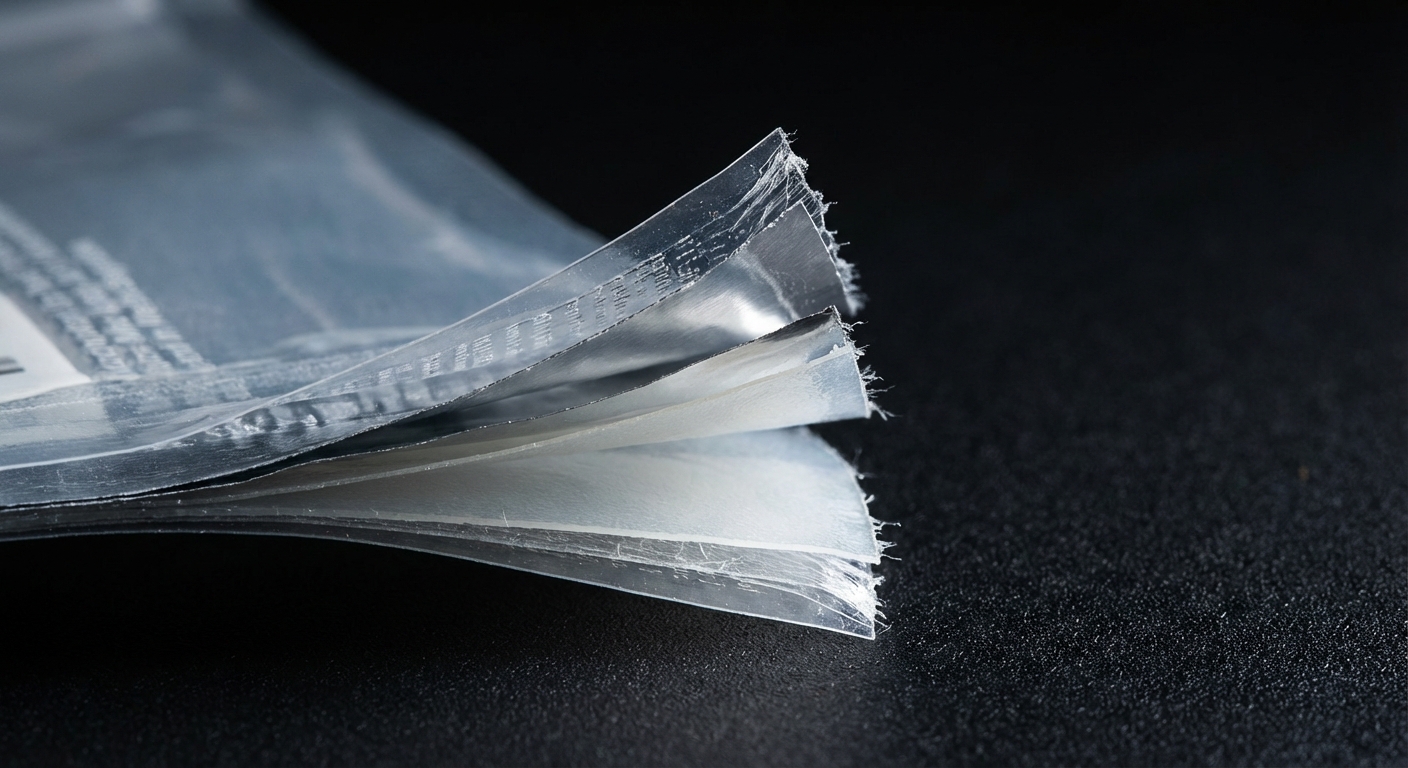
Multi-layer packaging is everywhere. Stand-up pouches for pet food, sachets of ketchup, crisp packets, coffee bags, beverage cartons, blister packs for tablets—the modern supply chain runs on packaging that combines two, three, or even seven distinct material layers into a single structure. These composites deliver outstanding performance: lightweight, durable, excellent barrier properties against moisture, oxygen, and light.
There is just one problem. UK recycling infrastructure cannot process them.
Under the Recyclability Assessment Methodology (RAM), multi-layer packaging consistently receives the worst possible outcome: a Red rating. That Red rating triggers the highest fee modulation multiplier under Extended Producer Responsibility, reaching 2.0x by 2029. For producers placing significant tonnage of multi-layer formats on the UK market, this is not a marginal compliance issue. It is a material financial exposure that will compound year on year as modulation rates escalate.
This article explains exactly why multi-layer packaging fails the RAM assessment, which common formats are affected, what the fee consequences look like, and—critically—what alternatives exist for producers who want to reduce their exposure before the full modulation timeline takes effect.
What Counts as “Multi-Layer” Under the RAM Methodology
The RAM methodology defines multi-layer packaging as any packaging structure that combines two or more material types that are bonded, laminated, co-extruded, or otherwise inseparably joined. The critical word is inseparable. If the consumer or the recycling process cannot readily separate the different material layers from one another, the packaging is treated as a multi-material composite.
This definition is broader than many producers expect. It captures not only obvious laminates (like a PET/aluminium/PE pouch) but also:
- Co-extruded films where different polymer layers are fused during manufacturing, even if all layers are technically “plastic”
- Metallised films where a thin layer of aluminium or other metal is vacuum-deposited onto a polymer substrate
- Coated substrates such as paperboard with a PE or wax moisture barrier that cannot be separated during repulping
- Adhesive laminates where two or more films are bonded together with adhesive layers
Conversely, some structures that look multi-layer to the untrained eye are not classified as such under RAM. A cardboard box with a removable plastic window is a multi-component pack, not a multi-layer structure, because the consumer can separate the materials before disposal. Similarly, a glass jar with a steel lid comprises two mono-material components, each assessed independently.
Key Distinction: Multi-Layer vs. Multi-Component
Multi-layer means inseparably bonded materials assessed as a single unit. Multi-component means separable parts assessed individually. A beverage carton (card/PE/aluminium bonded together) is multi-layer. A cereal box (cardboard outer plus a separate PE inner bag) is multi-component. The distinction matters enormously for your RAM rating.
How RAM Assesses Multi-Layer Packaging: The Decision Tree
The RAM assessment follows a five-stage process, and multi-layer packaging typically fails at multiple stages. Understanding where and why these failures occur is essential for developing a remediation strategy.
Stage 1: Is the Material Collected?
The first question is whether the packaging material is collected for recycling through UK kerbside or bring-site systems. Many multi-layer flexible formats are not yet included in standard kerbside collections. While the UK collection reform under EPR will expand flexible plastic collection to all local authorities, this rollout is still in progress. Multi-layer rigids (such as beverage cartons) may be collected in some areas but not universally.
If the material is not collected, the assessment stops here with a Red rating. No further analysis is needed.
Stage 2: Is It Sorted Correctly?
For multi-layer packaging that is collected, the next question is whether materials recovery facilities (MRFs) can sort it into a clean stream. Multi-layer structures present a fundamental sorting challenge: they do not fit neatly into any single material stream. A PET/alu/PE pouch is not PET, not aluminium, and not PE. Near-infrared (NIR) sorters may identify the outer layer but cannot determine what lies beneath. The item may be mis-sorted into a stream it does not belong in, contaminating that stream, or it may fall through to residual waste.
Metallised films create particular problems. NIR sensors may read the metallised layer as aluminium, sending the item to the metals stream where it does not belong and cannot be reprocessed.
Stage 3: Is Reprocessing Available?
Even if a multi-layer item survives collection and sorting, the critical question is whether UK reprocessing infrastructure can actually recycle it. This is where most multi-layer packaging definitively fails.
Recycling is fundamentally a process of separating materials into clean, single-material streams. Multi-layer packaging is designed to resist exactly that separation. The layers are bonded to create barrier performance—which means they resist delamination, the very process required for recycling. Without viable delamination at scale, the material cannot be reprocessed into usable secondary raw materials.
Stages 4 and 5: End Markets and Recyclate Quality
For the rare multi-layer format that reaches a reprocessor, the final stages assess whether there are end markets for the output and whether the recyclate quality is sufficient to be genuinely useful. Multi-layer recyclate, when it exists, tends to be a mixed-material output of limited value, which further suppresses the economic viability of recycling these formats.
The Practical Result
Multi-layer packaging typically fails at Stages 1, 2, and 3 simultaneously. It may not be collected, it cannot be cleanly sorted, and no established reprocessing pathway exists at scale in the UK. The RAM rating outcome is Red across virtually all multi-layer formats currently in commercial use.
Common Multi-Layer Formats and Their Ratings
Not all multi-layer packaging is created equal. Some formats are closer to viable recycling solutions than others. Here is a detailed breakdown of the most common multi-layer formats, their typical structures, and their current RAM status.
Flexible Pouches (Stand-Up Pouches and Sachets)
Flexible pouches are arguably the most widespread multi-layer format in UK retail. They are used for everything from baby food and pet food to coffee, rice, sauces, and detergent refills. A typical stand-up pouch consists of three to five layers: an outer PET or nylon layer for printability and puncture resistance, a middle aluminium foil or metallised PET layer for barrier performance, and an inner PE or PP layer for heat-sealability and food contact.
| Pouch Type | Typical Structure | RAM Rating | Primary Failure Point |
|---|---|---|---|
| Stand-up pouch (foil barrier) | PET / Alu / PE | Red | Inseparable layers; no reprocessing |
| Stand-up pouch (metallised) | PET / met-PET / PE | Red | Metallised layer contaminates sorting |
| Sachet (single-serve) | PET / Alu / PE or Alu / PE | Red | Too small for MRF sorting; multi-layer |
| Spouted pouch | PET / Alu / PE + PP spout | Red | Multi-layer body; mixed-material spout |
The volumes are significant. The UK flexible packaging market produces hundreds of thousands of tonnes annually. For food producers, pouches may represent the majority of primary packaging tonnage. Every kilogram of this tonnage will attract the highest EPR fee modulation rate.
Laminated Cartons (Beverage Cartons and Tetra Pak)
Beverage cartons—most commonly associated with the Tetra Pak brand but also produced by SIG Combibloc, Elopak, and others—are a multi-layer composite of paperboard, polyethylene, and (for aseptic formats) aluminium foil. A standard aseptic carton comprises approximately 75% paperboard, 20% PE, and 5% aluminium by weight.
Beverage cartons occupy an unusual position in the RAM landscape. They have a somewhat better outcome than most multi-layer formats because dedicated carton recycling infrastructure does exist—ACE UK operates collection and reprocessing schemes, and some mills can repulp the fibre content. However, the aluminium and PE layers remain problematic, and UK reprocessing capacity is limited compared to the volume of cartons placed on the market.
The current RAM assessment typically places beverage cartons at Amber rather than Red, reflecting the partial recycling pathway. However, this is contingent on continued investment in carton reprocessing infrastructure. Producers should not assume this Amber rating is permanent.
Film Laminates (Crisp Packets, Snack Wrappers, Confectionery Films)
Metallised film laminates are the standard packaging for crisps, snack foods, chocolate bars, and many confectionery products across the UK. The typical structure is an oriented polypropylene (OPP) base film with a vacuum-deposited aluminium layer for barrier properties and a heat-seal PE layer on the inner surface.
These films present a triple challenge. First, they are lightweight and flexible, making them difficult for MRF sorting equipment to handle. Second, the metallised aluminium layer confuses NIR sensors. Third, there is no established reprocessing pathway for metallised OPP films at commercial scale in the UK.
The RAM rating is consistently Red. With the UK consuming billions of individual crisp packets, snack wrappers, and confectionery films per year, the aggregate tonnage and fee exposure are substantial.
Blister Packs (Pharmaceutical and Electronics)
Blister packs combine a rigid formed cavity (typically PVC, PVDC-coated PVC, or cold-formed aluminium) with a peelable or push-through aluminium foil lid. They are the dominant format for pharmaceutical tablets and capsules, and are also used for small electronics, batteries, and hardware accessories.
Pharmaceutical blister packs face an especially severe RAM assessment. The PVC/aluminium combination is one of the most difficult multi-material structures to recycle. PVC is problematic in its own right (chlorine content contaminates other plastic recycling streams), and the bonded aluminium foil cannot be separated at scale. The RAM rating is Red.
While some innovative recycling schemes exist (such as the Superdrug and TerraCycle partnership), these operate at tiny volumes relative to the total blister pack market and do not affect the RAM classification, which is based on mainstream infrastructure availability.
Metallised Films
Metallised films deserve separate attention because they represent a distinct failure mode. Unlike full-foil laminates where two or more discrete material sheets are bonded, metallised films involve a microscopic (typically 40–100 nanometres) layer of aluminium deposited directly onto a polymer substrate. The aluminium content by weight is negligible—often less than 1%—but its impact on recyclability is disproportionate.
The metallised layer disrupts NIR sorting by reflecting the infrared signal, preventing accurate polymer identification. Even if the film reaches a plastic reprocessor, the aluminium contamination can degrade the quality of the recycled output. For these reasons, metallised films receive a Red rating under RAM regardless of the base polymer type.
The Metallisation Paradox
Metallisation adds less than 1% by weight to the packaging but shifts the entire item from a potentially recyclable polymer to a Red-rated composite. It is one of the most cost-inefficient features a producer can retain under the EPR fee modulation regime.
The Fee Impact of Red Ratings
Understanding the financial exposure from Red-rated multi-layer packaging requires looking at the EPR fee modulation timeline. The modulation multiplier for Red-rated packaging increases progressively between 2025 and 2029.
| Year | Green Multiplier | Amber Multiplier | Red Multiplier | Red Premium vs. Green |
|---|---|---|---|---|
| 2025 | 0.8x | 1.0x | 1.0x | +25% |
| 2026 | 0.7x | 1.0x | 1.2x | +71% |
| 2027 | 0.6x | 1.0x | 1.5x | +150% |
| 2028 | 0.5x | 1.0x | 1.75x | +250% |
| 2029 | 0.5x | 1.0x | 2.0x | +300% |
By 2029, a producer paying the Red multiplier will face fees four times higher per tonne than a producer using Green-rated packaging. For a food manufacturer placing 200 tonnes of multi-layer flexible packaging on the market, the difference between Red and Green could amount to tens of thousands of pounds per year.
Consider a practical example. If the base EPR fee for plastic packaging is £200 per tonne and you place 150 tonnes of Red-rated multi-layer film on the market in 2029:
- Red fee: 150 tonnes × £200 × 2.0 = £60,000
- Green fee (if switched): 150 tonnes × £200 × 0.5 = £15,000
- Annual saving from switching: £45,000
That £45,000 annual saving is recurring. Over a five-year horizon, the cumulative benefit of switching 150 tonnes from Red to Green exceeds £150,000. For larger producers with thousands of tonnes of multi-layer packaging, the numbers scale accordingly.
Alternatives to Multi-Layer Packaging
The good news is that viable alternatives exist for many multi-layer applications. The packaging industry has invested heavily in mono-material and recyclable alternatives, driven by both regulatory pressure and brand sustainability commitments. Here are the three primary strategies.
Mono-Material Alternatives
The most straightforward route to an improved RAM rating is replacing multi-layer structures with mono-material equivalents. Mono-material packaging uses a single polymer type throughout the structure, making it compatible with existing sorting and reprocessing infrastructure.
- Mono-PE pouches: All-polyethylene structures using different PE grades (HDPE, MDPE, LLDPE) in each layer to achieve the necessary barrier and mechanical properties. These are now commercially available from major film manufacturers including Mondi, Berry Global, and Amcor. RAM rating: Amber (improving to Green as flexible collection expands).
- Mono-PP films: All-polypropylene structures for applications where PP is the preferred polymer. Particularly relevant for snack packaging and confectionery wraps. RAM rating: Amber.
- Mono-PET trays and lids: Replacing multi-material tray/lid combinations with all-PET structures where both the tray and the lidding film are made from PET. RAM rating: Green (if clear/natural and free from carbon black).
The trade-off with mono-material alternatives is often reduced barrier performance. A mono-PE pouch may not match the oxygen barrier of a PET/alu/PE laminate, which can affect product shelf life. For chilled products with short shelf lives, this trade-off is often acceptable. For ambient products requiring 12–24 months of shelf stability, the performance gap may still be a challenge.
Separable Multi-Material Designs
Where mono-material solutions are not technically feasible, the next best approach is designing multi-material packaging with components that the consumer can easily separate before disposal. If each separated component is made from a single recyclable material, the individual components can achieve their own (potentially better) RAM ratings.
- Peelable labels and sleeves: Replacing adhesive-bonded paper labels on plastic containers with easily peelable or shrink-sleeve labels that the consumer can remove
- Snap-apart components: Designing closures, spouts, or fitments that can be cleanly separated from the main body
- Inner bag / outer box: Using a separate mono-material inner bag within a cardboard outer box, rather than a barrier-coated single structure. Each component is assessed independently under RAM
Paper-Based Alternatives
The shift toward paper-based packaging is accelerating as brands seek materials with established recycling infrastructure. Paper and cardboard have well-developed collection and reprocessing systems in the UK, and the base material typically achieves a Green RAM rating.
However, paper-based alternatives for multi-layer applications come with important caveats:
- Barrier coatings matter: Paper packaging that requires a moisture or grease barrier may need a PE coating or wax treatment. If that coating is inseparable during repulping, the pack may still receive a lower RAM rating. Water-based barrier coatings that are compatible with paper recycling are preferable.
- Fibre recovery rates: The RAM assessment considers whether the fibre can actually be recovered. Heavily coated or laminated paperboard may have lower fibre recovery rates, which affects the rating.
- Weight considerations: Paper-based alternatives are often heavier than the multi-layer plastic formats they replace. While the RAM rating improves, the absolute tonnage reported increases, which partly offsets the fee reduction from a better multiplier.
Worked Example: Switching from Multi-Layer to Mono-Material
Consider a UK-based snack producer placing approximately 80 tonnes of metallised OPP film wrappers on the market annually. Under the 2026 fee structure, the Red rating on this tonnage resulted in an EPR fee of approximately £19,200 (80 tonnes × £200 base rate × 1.2 multiplier).
Working with their film supplier, the producer transitioned to a mono-PP structure with an EVOH barrier layer co-extruded within the PP matrix. The new structure met the majority of the original barrier specification (shelf life reduced from 12 months to 9 months, which was acceptable for their distribution model) and qualified for an Amber RAM rating.
The Results
| Metric | Before (Metallised OPP) | After (Mono-PP) |
|---|---|---|
| Annual tonnage | 80 tonnes | 85 tonnes (+6% from slightly heavier film) |
| RAM rating | Red | Amber |
| 2026 EPR fee | £19,200 | £17,000 |
| 2029 projected EPR fee | £32,000 | £17,000 |
| 5-year fee saving | ~£42,000 | |
| Film cost change | +8% per tonne (mono-PP premium) | |
| Net 5-year benefit | ~£28,000 after higher film cost | |
The transition required approximately four months of development and trialling, including shelf-life testing and line speed validation. The producer achieved a positive return on investment within 18 months, with the financial benefit growing each year as Red modulation multipliers increase.
The economics of switching away from multi-layer packaging become more compelling every year. The modulation timeline is designed to make Red-rated formats progressively uneconomical. Producers who move early benefit from both lower fees and longer payback periods on their packaging development investment.
Practical Steps for Producers
If multi-layer packaging constitutes a significant portion of your portfolio, here is a structured approach to managing your exposure.
1. Audit Your Multi-Layer Tonnage
Identify every multi-layer format in your packaging portfolio. For each format, record the material structure (all layers), annual tonnage, current RAM rating, and the application it serves (what product it packages and why that specific structure was chosen). This audit gives you the data needed to prioritise.
2. Prioritise by Fee Impact
Rank your multi-layer formats by their EPR fee contribution. The highest-tonnage Red-rated items represent the greatest financial exposure and should be the first candidates for reformulation. Use fee modulation projections out to 2029 to quantify the cumulative saving from switching each format.
3. Assess Technical Feasibility
For each prioritised format, work with your packaging supplier to evaluate mono-material and separable alternatives. Key questions include: Can the required barrier performance be achieved with a mono-material structure? What is the shelf-life impact? Does the alternative run on existing packaging machinery, or is capital investment required? What is the film cost differential?
4. Start with Quick Wins
Some multi-layer applications have straightforward mono-material alternatives. Short shelf-life products (chilled foods, bakery, fresh produce) typically have lower barrier requirements, making them the easiest starting point. Secondary and tertiary packaging (outer wraps, transit packaging) may also present simpler switching opportunities.
5. Engage Your Supply Chain
Packaging material transitions require collaboration across the supply chain. Brief your suppliers early, involve your packaging technologists, and ensure your procurement team understands that the lowest-cost film is no longer necessarily the lowest total cost once EPR fees are factored in.
6. Reassess Annually
The mono-material packaging market is evolving rapidly. Barrier technologies that were not commercially viable two years ago may now be available. New recycling infrastructure may change RAM ratings for specific formats. Build an annual reassessment cycle into your compliance process.
See your multi-layer fee exposure
Repackd automatically identifies multi-layer formats in your packaging data, calculates their RAM ratings, and projects fee modulation costs through 2029. Know exactly where to focus your reformulation efforts.
Looking Ahead: Will Multi-Layer Packaging Ever Be Recyclable?
There is ongoing investment in technologies that could eventually enable multi-layer packaging recycling at scale. Chemical recycling (pyrolysis and solvolysis) can theoretically break down mixed-polymer structures into feedstock chemicals. Delamination technologies that separate bonded layers using solvents or mechanical processes are being developed by several European research consortia.
However, none of these technologies operate at commercial scale in the UK today, and the RAM methodology is explicitly based on currently available infrastructure. Producers should not bet their compliance strategy on future technology becoming available in time to avoid escalating fees. The prudent approach is to reformulate where possible now and monitor technology developments for the formats where mono-material alternatives are not yet technically feasible.
DEFRA has indicated that RAM ratings will be reviewed periodically as infrastructure evolves. If viable commercial-scale multi-layer recycling emerges, the ratings for affected formats could improve. But that review cycle operates on a multi-year timeline, and the fee modulation escalation is already underway.
Summary
Multi-layer packaging receives Red RAM ratings because UK recycling infrastructure fundamentally cannot process inseparably bonded multi-material structures. The layers that make these formats so effective as packaging—providing barrier properties, mechanical strength, and shelf-life extension—are precisely the features that make them impossible to recycle through current systems.
The financial consequences are clear and escalating. By 2029, Red-rated packaging will cost four times as much in EPR fees as Green-rated alternatives. For producers with significant multi-layer tonnage, the cumulative fee exposure over the next five years justifies investment in mono-material and separable alternatives.
The transition is not always simple. Some applications require multi-layer structures for genuine technical reasons, particularly where long ambient shelf life and food safety are non-negotiable. But for many applications, viable alternatives already exist and are being adopted by forward-thinking producers who recognise that the cost of inaction grows with every year of the modulation timeline.
Take control of your packaging compliance
Repackd gives you instant RAM assessments, fee projections, and reformulation insights for every packaging component in your portfolio. Start making data-driven packaging decisions today.